The crew knows where to go. You know they got there.
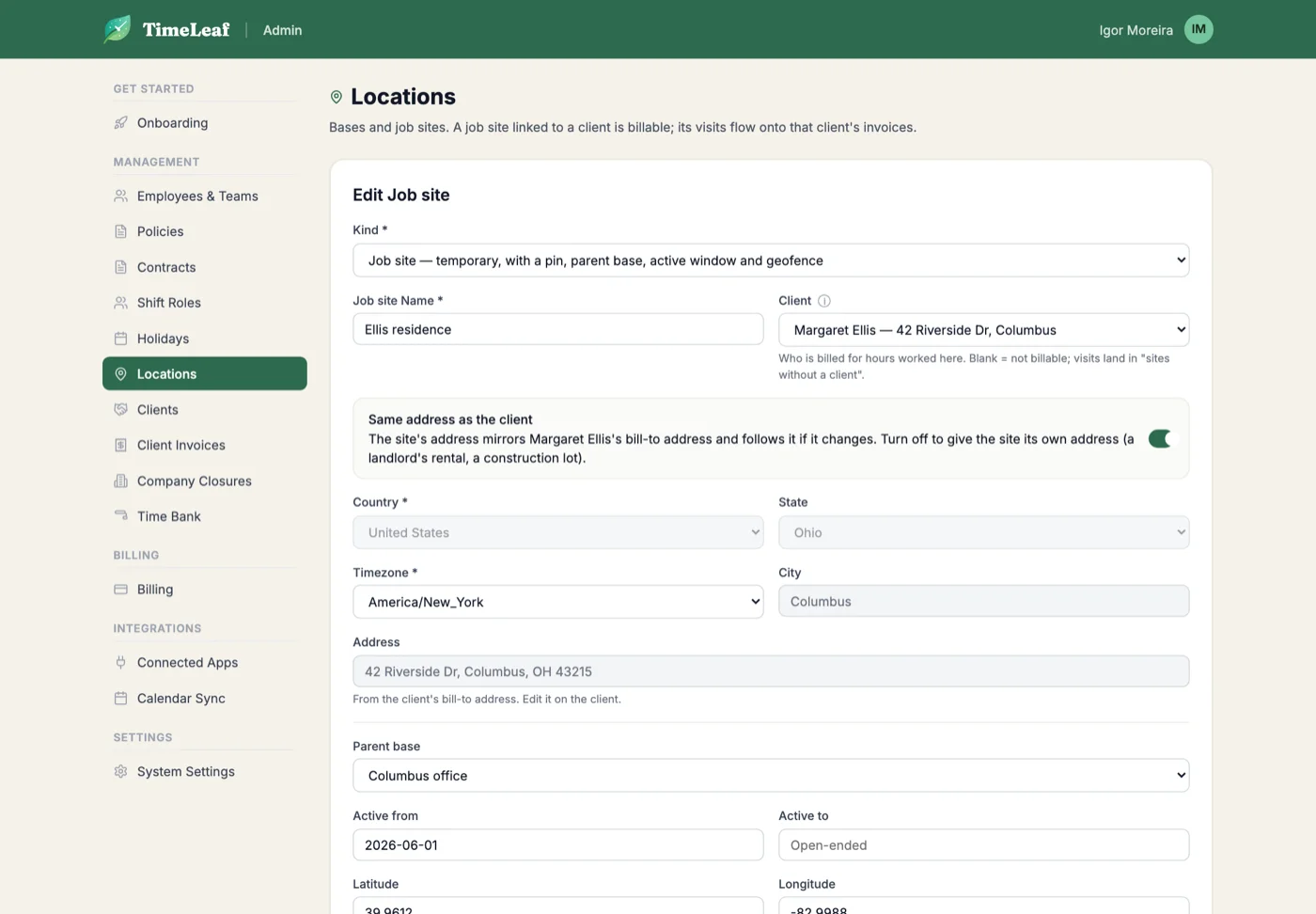
A job site is a pin, a geofence and the dates it is active. A shift carries a route through one or more of them. The crew checks in at each door from their phone, and the check-in is what your timesheets, dispatch and invoices are built on.
Job sites and routes come with shift scheduling on Professional and up; switch them on from Locations.
Three steps. Zero new habits.
Add the site
Name, address, pin, geofence radius and an active window. Link it to the client who is billed for work there, and mirror their address with one switch.
Route the shift
A shift is a route: one stop for a patient’s home, several for a service run. The dispatcher sees who is nearest to the first stop before assigning.
Check in at the door
The crew checks in and out of each stop from their phone. A tap far from the pin is flagged for the manager, never rewritten. The visit becomes the evidence on the invoice.
Everything in the box.
- Temporary job sites with active windows
- Pin and geofence radius per site
- Parent base, so bases and sites stay distinct
- Routes with several stops per shift
- Check-in and check-out at each stop, with GPS distance
- Dispatcher sees who is nearest to the site
- Site linked to the client it is billed to
- New job: customer and site created in one step
See also: Shifts · Timesheets · Invoicing
Your first route this week.
Add a site, put it on a shift, hand the crew the phone. The check-ins do the rest.
Start free trial7-day free trial · Live in 30 minutes